

A La Parrilla
From 'La Vid en Argentina' Series

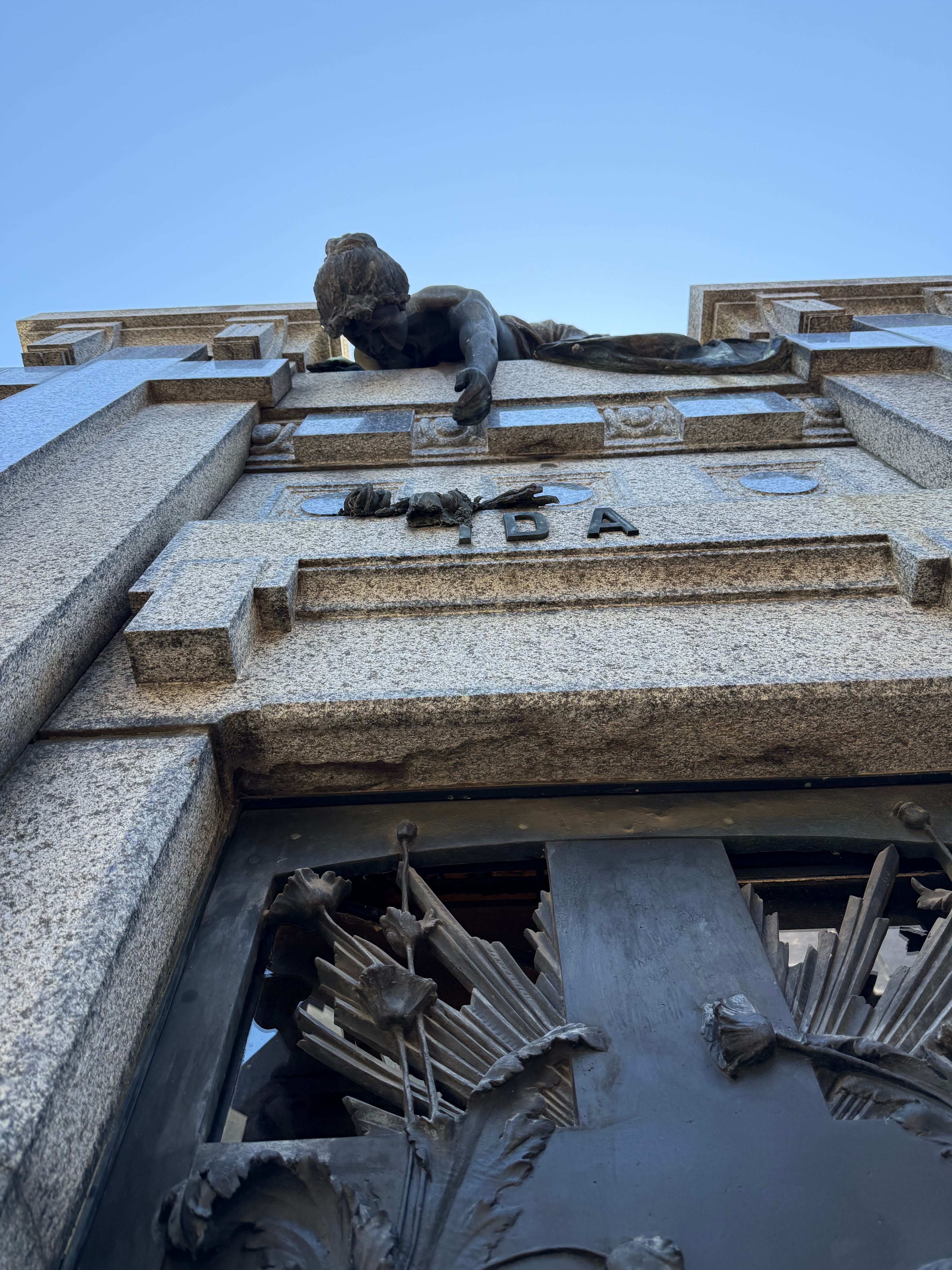
This article is part of a series - ‘La Vid Argentina’ - Letters from my two week immersive wine trip to Argentina, exploring old and new regions, wine makers I know and new voices. Observations and feelings around Latin roots, Argentina today, its makers and its wines. Que disfruten!
Buenos Aires tiene que ser la ciudad mas linda del mundo’ I texted Felipe on my first day of being there. ‘Just don’t tell them, please, because they already believe that their city is the most beautiful’ he texted back. Argentines are known amongst Latinos as having a great dose of arrogance. I personally find this healthy and incredibly appealing. To me, their arrogance is more a type of seamless confidence that I find irresistible. I am in Argentina and there’s a simple kind of elegance in the air, in the spaces built and most definitely in the food - ‘Todo a la parrilla’. Ingredients elevated purely by the touch of fire. Have you spoken to an Argentine about potatoes? I have. I remember a few years back a conversation I had with Chef Mica from Anafe after they had done a legendary Sunday Asado at Colonia Verde. The chat wasn’t timed and I was slightly high, but it’s safe to say it was long. She talked to me about one single subject - The potato, and the various variants that exist in Argentina. I was mesmerized at how the depth of a single ingredient could be explored, and of such a basic vegetable of all things. Now in Buenos Aries, I am back at the table with Mica, sharing a bottle of Casa Yague, Chardonnay at Naranjo Wine Bar and I am realizing she’s ingredient obsessed, but so are all Argentines. ‘Tamy que suerte que estas aqui esta semanaaa’ Mica says to me. ‘Es el Festival del Tomate!’. According to Mica, I am so so lucky to be in Buenos Aires now because it happens to be the Festival of the Tomato. When she first said it, I thought she was pranking me, as a form of reminiscing our endless potato conversation back in Brooklyn. She wasn’t. For the past six years, the restaurant Don Julio and El Preferido de Palermo have created a week long celebration around the tomato, where they expose Argentines to the over thirty ancestral tomato varietals that exist in Argentina.
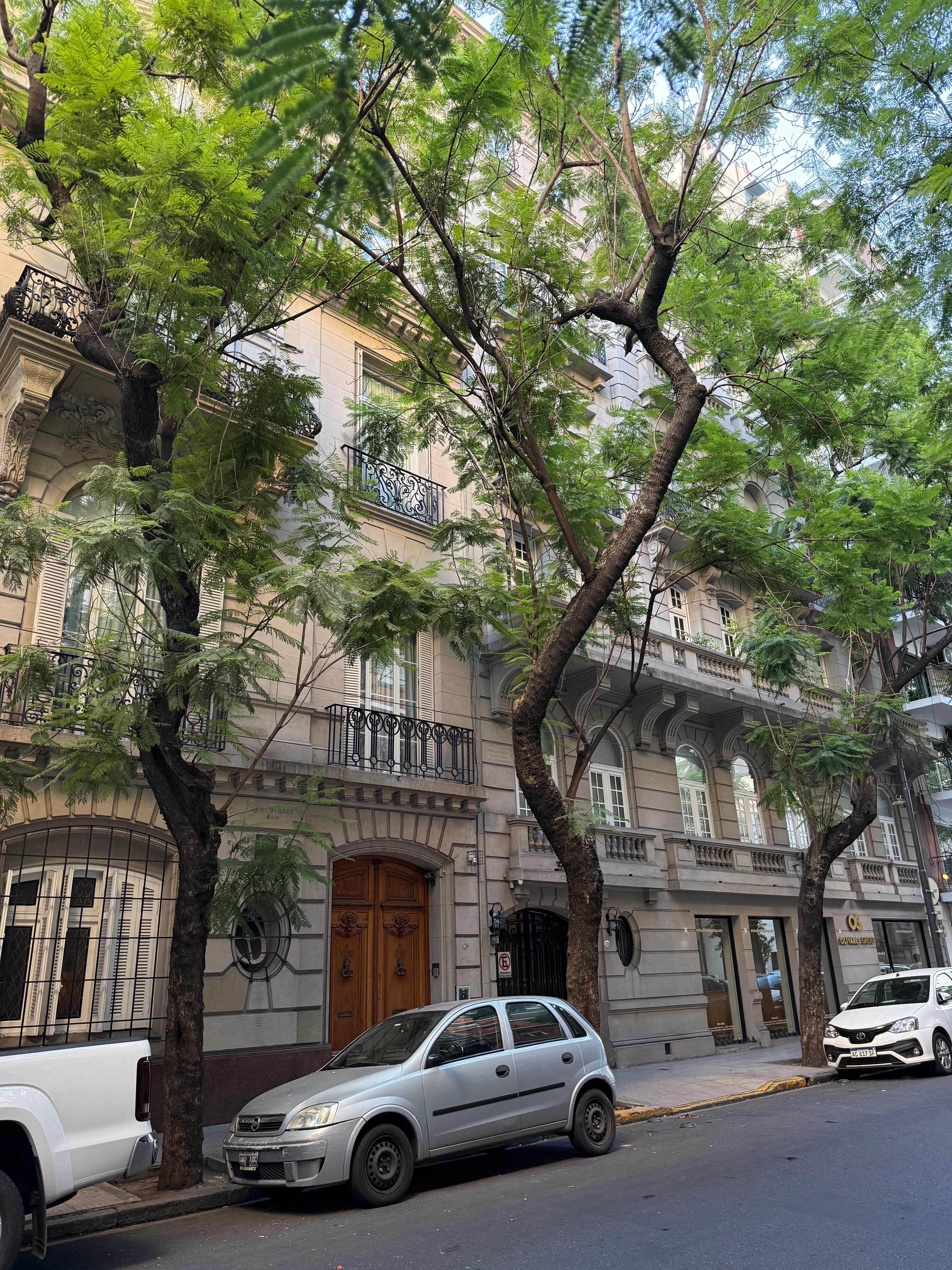
I keep walking around Baires because there really isn’t a more beautiful city and to walk her streets elevates your step - All of a sudden you are floating on air. I get a text from my friend Fefo - ’Cuando vayas a Corte Comedor a comer con El Guri, tienes que probar lo que es la ceja’. ‘El Guri’ nickname for ‘little one’ is Santiago Garat, chef and owner of Corte Comedor. ‘Ceja’ as I was taught while dining there, is a muscle right at the center of the cow’s back, one that the animal doesn’t really get to use because of its position in the body, making the meat incredibly soft and juicy. Argentines, all of them, have a masters in cow anatomy. It’s culturally democratic - Everyone can identify even the most obscure parts of a cow and throw them on the grill. Cut out a few vegetables and viola! Dinner is served and it is absolutely delicious. There’s no sauce, no add ons, no excessive amount of butter. It is the ingredient in its most naked form. They might throw a freshly made chimichurri and coarse salt but that is about it.
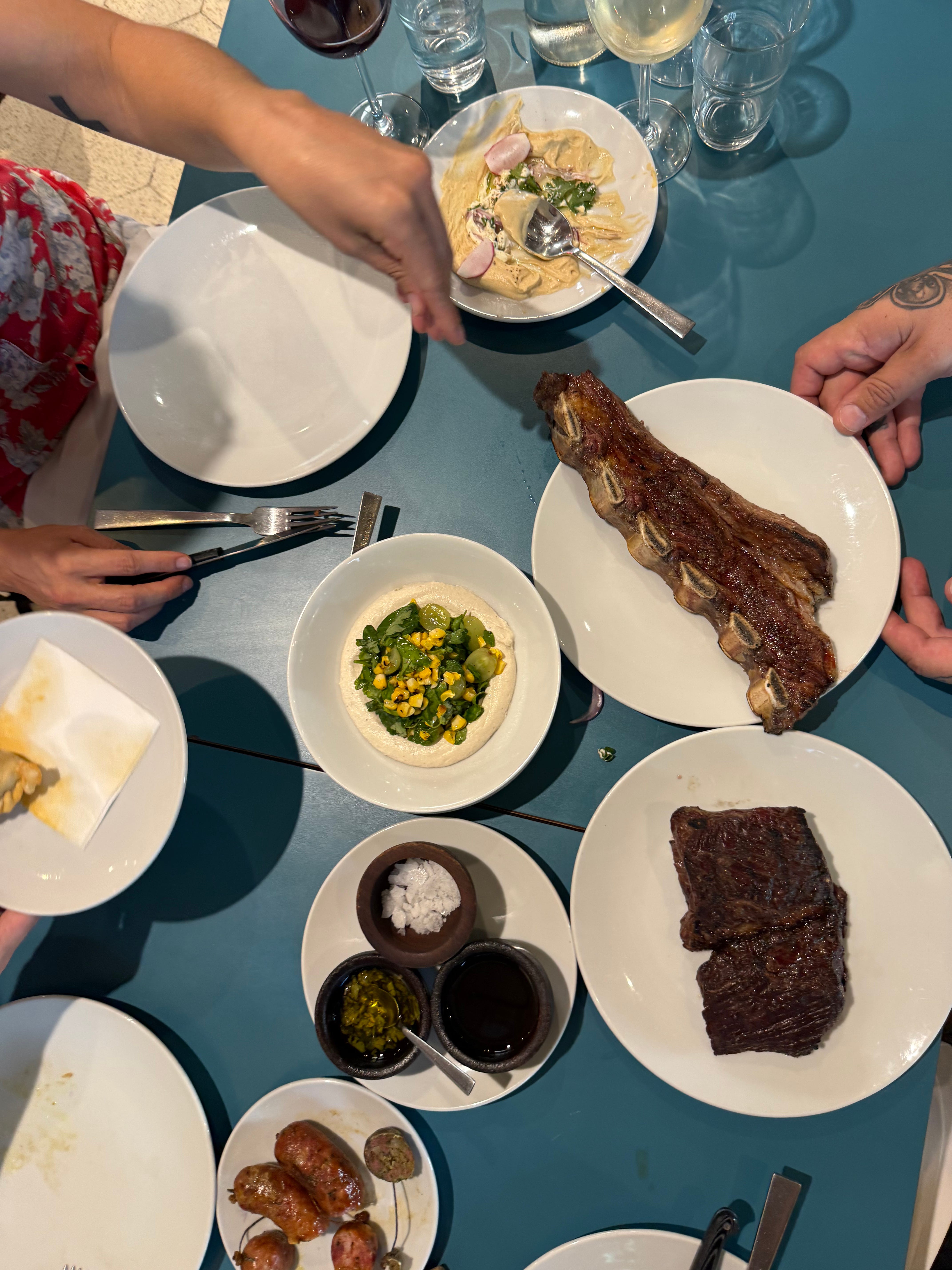
And now, as I was able to observe in my time in Argentina, wine is catching up to this mentality - An ultimate reverence to the ingredient. It wasn’t always like this though…
For various decades, the parrillada which revers the raw ingredient by elevating it simply with fire, was partnered next to a more adulterated Malbec. An odd pairing that when you look at its history, it makes sense. It was Malbec that put Argentines in the international map in the 90s, a time when big, full, oaky wines was pleasing the big critics’ palates. All of a sudden, Argentina and its wine was known worldwide! Argentines embraced it internally, just as much as it was embraced overseas. I get it, what an honor! To be pinned on the international wine map, something to be proud of. But it was this same claim to fame that inevitably trapped the entire Argentine wine identity into a single grape and a single style.
Now, the story for wine is evolving to meet the simple parrillada - Emphasizing and galvanizing the ingredient, the ‘materia prima’.
The wine maker that reaffirmed to me this new direction the most was Gabriel Dovskin at Canopus wines. Gabriel is at the most southern point of Altamira in Valle de Uco Mendoza, or what he calls ‘el lugar mas frio, calcario y vivo’ (‘the coldest, most alive and calcareous place in Mendoza’). I had met Gabriel in New York over a decade ago, when we threw Latin American parties focused on Renegade Latin American wine makers. We were eager to identify and celebrate all the black sheep from South America who were exploring their own land in a new way, digging deeper than just Malbec. Gabriel, or as his other wine peers call him ‘Gaby’, is an ex war correspondent that fell for wine and its makers. The events we ran together were full of passion for the counter culture movement of Latin America. Now, after all these years, I find him on his own turf, making his own wine for the past decade. Still wildly bearded but now incredibly geeky, Gaby had morphed into a man of the soil and of the Microderm that lives within it.
‘La potencia y el sabor esta en la tierra’ Gaby looked up at me, hands deep into the soil. ‘The potency is in the soil’. There are ten million organisms per each gram that live on the ground’ he continued while digging treasures through the dirt. We talked about fungi, as the most symbiotic organism that allows connection to other micro organisms. After deep diving into the soils and vines, Gaby finally said ‘Ahora, comemos y bebemos’. It was time to eat and time to taste.


It wasn’t just eating and drinking though. Gaby had organized an entire asado. His friend Andres owner of Cache Bistro in Mendoza, a wine maker groupie who happens to cook masterfully was on the grill. Other wine makers had joined as well. We stood by the parrilla for our first bite - Choripan with Gaby’s Nox - A sparkling malbec with tons of grapefruit, vegetal notes and a bitter bite at the end. The most refreshing aperitivo.
The chatting moved to the table, with boards of meat and vegetables a la parrilla. We were now tasting different vintages of Gaby’s ‘Pintom’, his study on cool climate Pinot Noir.
‘Quiero crear volumen sin peso, y que mi vino sepa como una vaca flotando en el espacio’. Gaby was explaining to us his goal when making wine - To create volume without weight, like a cow floating in space. Gaby’s wines are like the parrillada itself - Food with substance but with an air of simplicity and lightness. With his wine, he creates the illusion of density without the overbearing weight that let’s you eat more and drink more and talk more….
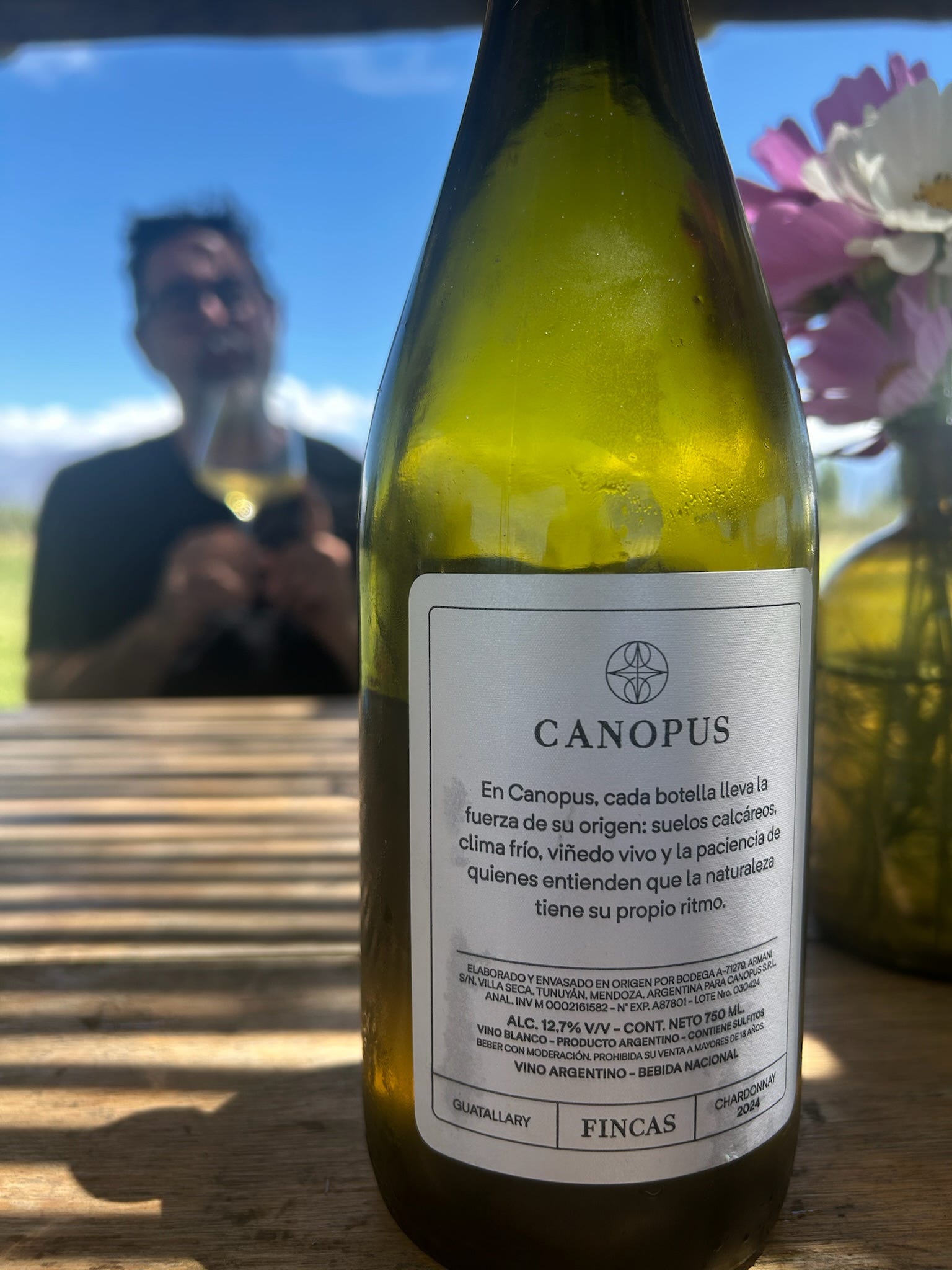
The asado went on for hours. We finished with his ‘Malbec de Sed’ - A wine that opens the door to Argentina’s past pre - international craze, or at least that’s where my imagination went. A Malbec untouched by commerce. Floral on the nose, fresh on the palate with blue and red fruits. ‘It’s got some Semillon blended in, the way it was done before single varietal labeling took place’ Gaby explained. This touch of white grapes gave the wine wonderful freshness and aromatics. I was drinking it like the name was telling me to - ‘con sed’ (with thirst) while munching on peaches that had been on the grill, honey sprinkled on top.
After hours of gathering, with food and wine running through me like a well, I felt ready to make a big declaration. All of us felt close at this point and I got the courage in me to make the confession. I waited for a quiet moment to dive in and gather the table’s attention.
‘I have to confess that I love all things Argentina except for its futbol and my family hates Messi’.
Silence, followed by fury. It was almost as if we had to start over, to take the five hours back and put in five more of purely soccer talk, eating and drinking. The table got passionate, with everyone making loud and brilliant arguments pro Messi, mostly about how his fame didn’t derail him, the way it did so many like Maradona. I made them send videos to my son Elan, all explaining their arguments of why he should be a Messi fan. I had arrived at the last frontier, they had won me over with their streets, their simple confidence, their food and wine and now with their soccer. I knew I would come back home a Messi fan and would have to face my family. I cheered with the ‘Mablec de Sed’, in love with all things Argentina, and with so much thirst of what comes next.
Yes yes we get it. They won the World Cup!
Awesome writing. Really took us through the whole Argentine love for life.