

El Nuevo Progreso
From 'La Vid Argentina' Series , Jujuy 2026

This article is part of a series - ‘La Vid Argentina’ - Letters from my two week immersive wine trip to Argentina, exploring old and new regions, wine makers I know and new voices. Observations and feelings around Latin roots, Argentina today, its makers and its wines. Que disfruten!
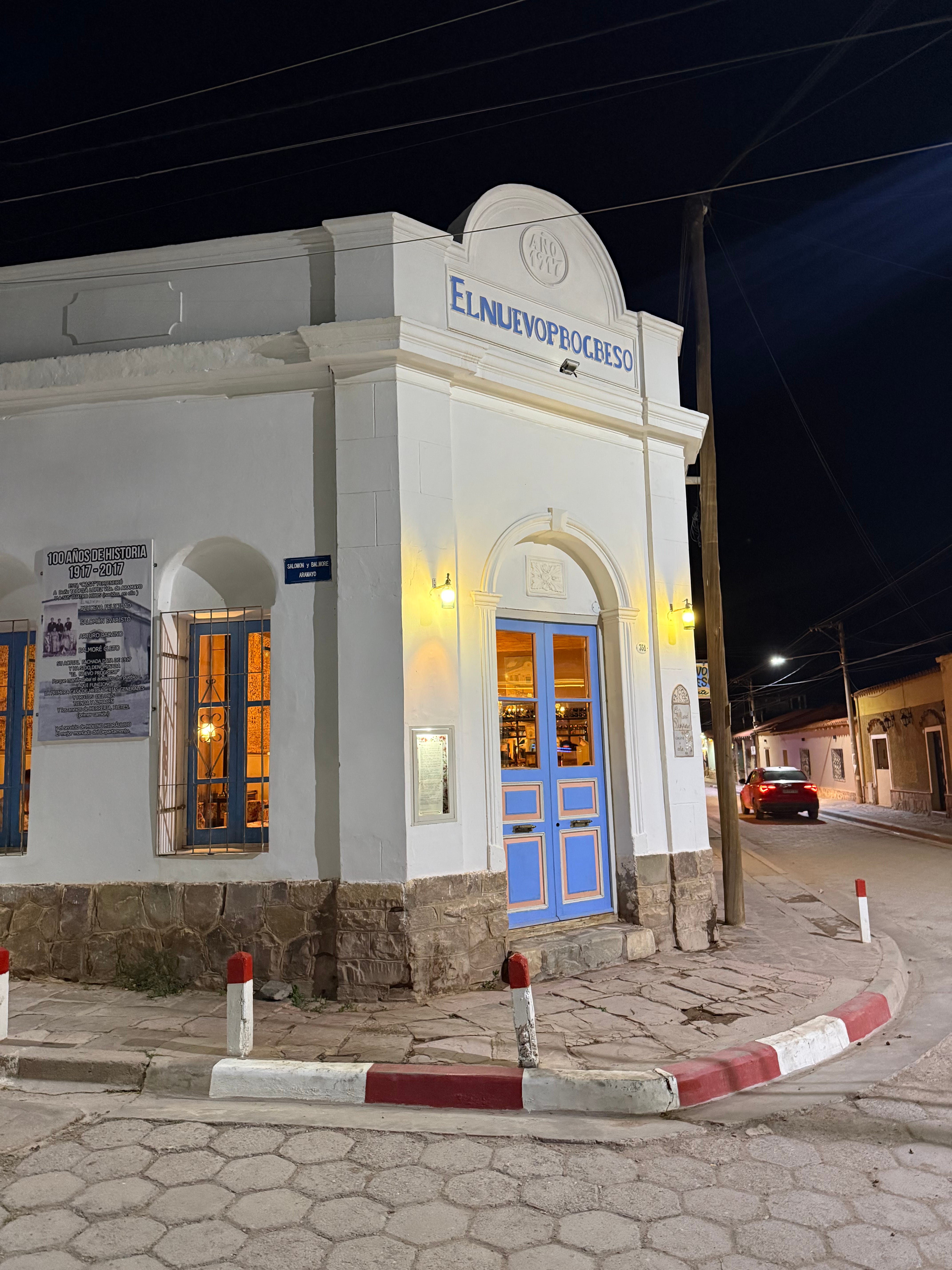
I am feeling inclined to tell you about my Argentina trip by starting at the end of it. The end is what wrapped it up for me, particularly, a dinner I had at El Nuevo Progreso, the crown jewel restaurant of Jujuy, Argentina.
El Nuevo Progreso is a restaurant run by a husband and wife team - Flor cooks, Fernando paints and his art is everywhere in the room. It’s been around for twenty five years! The idea of the place, as it is gracefully told to you via a booklet they hand over to your table, is that guests get to ‘eat the colors of the Jujuy panorama’. I loved the idea, of getting to devour the multi - colored mountains I had been immersed in the past few days. Jujuy is truly a place so appealing to the eye that it made sense to me that you’d want to eat it. This natural beauty I am seeing, what would it taste like?

‘Let’s get a bottle’ Dani says to me, as we launch into the lost art of sharing a bottle at the table. Its February 2026, a time when almost all is lost but here in Jujuy, the most Northwest region of Argentina bordering Bolivia, tradition is found in everything and everywhere. ‘Vas a Jujuy!? Ayyy te vas a ENAMORAR!’ My Argentine friend Fefo had told me. ‘You’ll fall deeply for Jujuy because it is our Oaxaca. A place of roots, it’s ancestral’ he went on.
Dani is now scanning through the menu. I am captivated by the space and even more so by the name of the place - El Nuevo Progreso (‘the new progress’). Latin American culture is so intertwined with the idea of progress. We hear it from artists, from politicians, from outsiders. It’s pounded into our hearts, minds and our imagination. We read it in Gabriel Garcia Marquez’ One Hundred Years of Solitude and his search for the fictional Macondo, a ‘new city’ with the promise of a new way, one that will make headway. Progress is expected of us, always. A Third World conglomerate of countries with a collective anthem cheering for us to climb up, up, up…
My mind gets back to the table and now I am looking at Dani. I am so proud of her, she’s like a fish in water navigating this menu of all Argentine wines and particularly, wines from Jujuy. Dani has acclimated to Argentine culture, she’s basically a Porteña by now. She’s been in Buenos Aires for the past two months dancing Tango ‘disidente’ - a style that is open and free of rigid roles at Estudio de Tango Cuir. We have been colleagues for the past decade and Dani (short for Daniela) directs finances for all our food ventures. Seeing her now navigate wine in such a seamless way (after spending ten days with me and visiting fifteen wine makers in Mendoza) gives me so much joy. ‘Mira! She looks up from the menu at me. ‘Los vinos de Ulises de Bodegas Yannay!’ She says excitingly, pointing to the menu.
Earlier that day, we had visited Ulises, the wine maker behind the project Bodegas Yannay. We had an appointment to meet at the pueblo of Tilcara, where we would eat fried empanadas, ‘the best in Jujuy!’, he had texted. He showed up with two glasses and a contraband bottle of wine in his tote bag. Ulises has worked with Bianka and Daniel at Weingut Schmitt in Germany and also with Paul Hobbs in California. He is fearless about learning and soaking in the more traditional estates just as much as the newer, biodynamic ones. Now he’s landed in this project - Expressing what Jujuy is all about in the form of wine. We tasted and ate empanadas. Ulises was right, perhaps the best empanadas I’ve ever had! In the background was a procession - The beginning of carnaval week in Jujuy - An ancestral celebration that blends Andean indigenous rituals with Spanish tradition and has existed for over four hundred years.


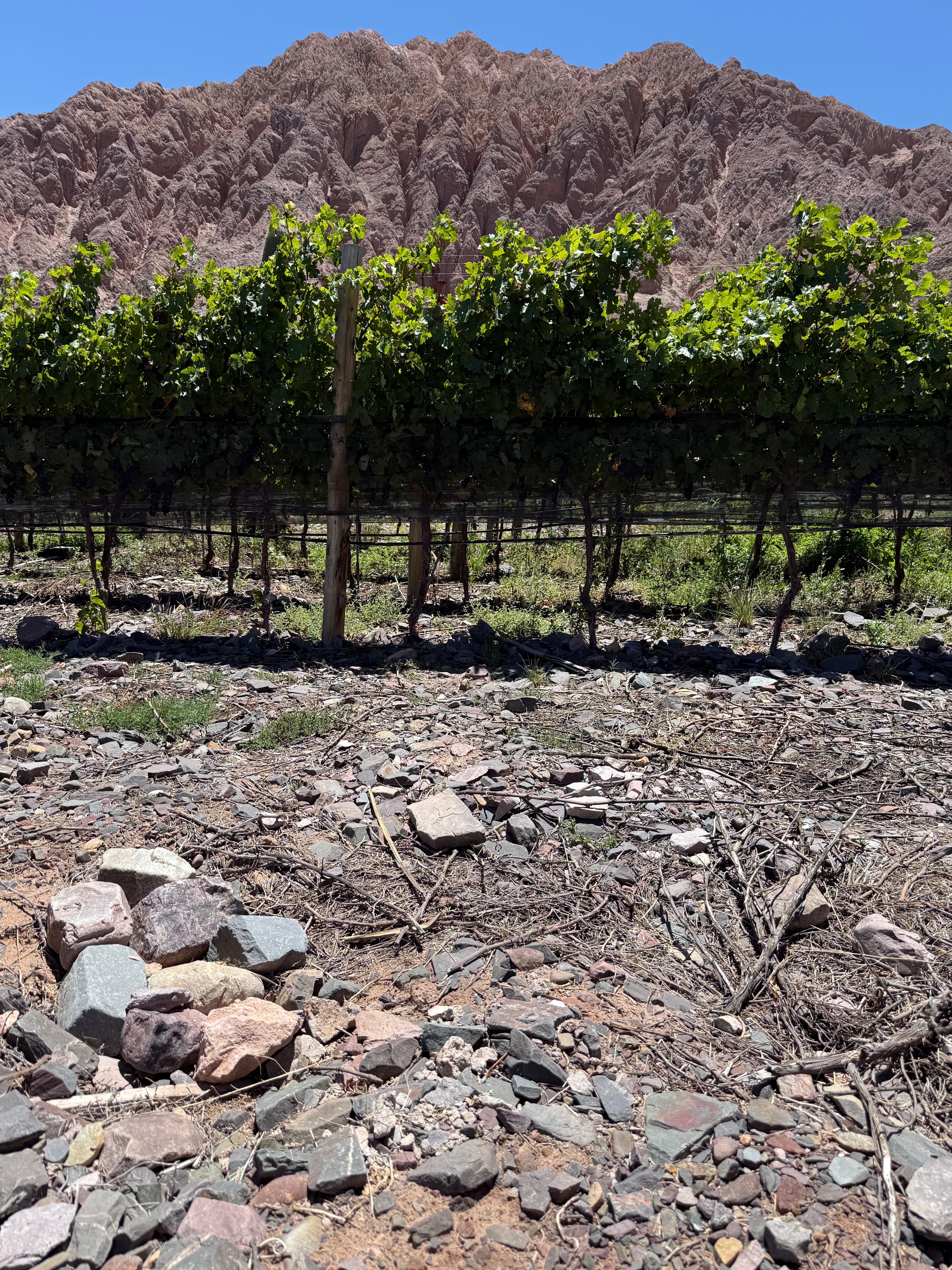
After empanadas, we drove to the vineyards nearby. Looking up, we could see the Quebrada de Humahuaca, declared an Unesco site in 2003. Looking down, we could see soil covered with galet roules stones - A surreal sight. Ulises is growing Rhone varietals, the soil makes sense for them. His Grenache blew me away. It tasted unlike any I’ve ever had - Plants and herbs on the nose, with a grainy tannin on the palate….as if tasting the dessert of Jujuy. The fruit was fresh and lifted but also you could taste notes of umami.
Back at El Nuevo Progreso the choice for bottle had been made, now Dani and I had to nail the food that will accompany this beautiful wine. It was our last dinner and the steaks were high. We wanted to nail it, to truly commemorate such an expansive trip. The manger came over, we asked for more direction. It turns out, eating llama was the way to go. ‘It’s the house’ specialty and what Jujuyans eat most’. I channeled the Felipe inside of me, put the adorable fuzzy-horse like animal out of my mind and said ‘dale! Llama para las dos’.
The wine arrived, Bodegas Yannay, ‘Garnacha’ 2023. I am glad we went for the bottle because it allowed Dani and I to bypass the numbers and finance conversation and truly open up. We talked about relationships, about tango and her progress after having danced it more intently. ‘My goal is to smooth out the transitions. Good tango dancers, they are able to dance as if they share one single back’ she had explained to me. I was intrigued that a dance that feels so much about the two individuals had in fact a third presence - The dance itself. The dance itself is what leads, the mechanics are about smoothing out the edges, making the push and the pull invisible, aligning into one single backbone. Tango is a dance that began with slaves in Argentina as a way to show resistance through joy, music and dance and it was mostly danced between men. ‘Our Queer Tango group, we are just claiming back its roots’ Dani had explained.
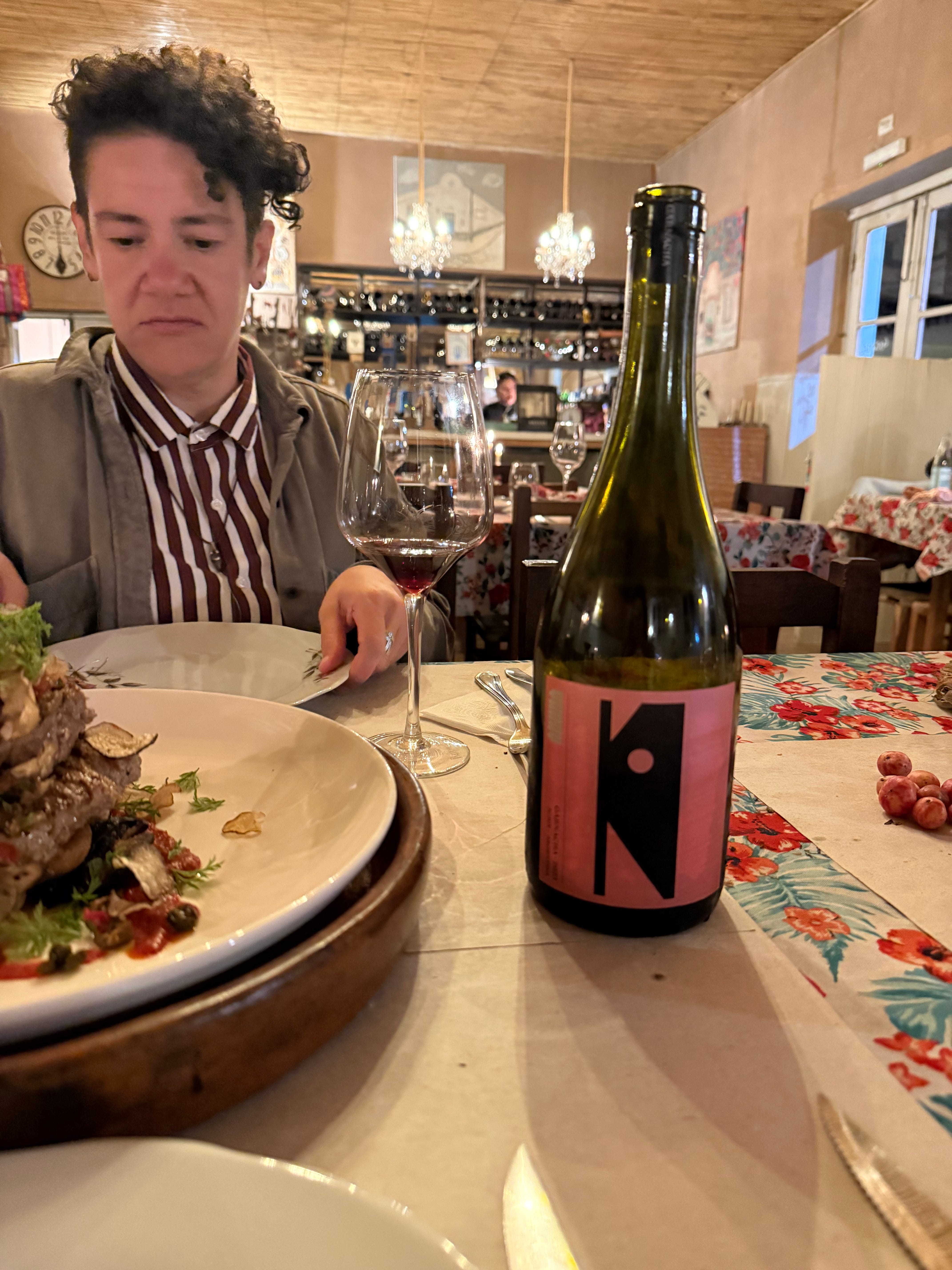
The llama came and I ate it with joy. It played wonderful with our bottle of wine. Dani and I dragged the conversations late into the night. It had become obvious that this whole trip, it signaled a new kind of progress. I felt like the restaurant had dropped into our laps as a sign - ‘Look here!’. There’s a new progress happening in Argentina, perhaps in all of Latin America and its not about climbing up but instead about looking in, recognizing our earth, our joy, our history.
In the story of Gabriel Garcia Marquez, there’s an English train that arrives at the fictional town of Macondo. It comes disguised as ‘progress’. It wrecks the entire village.
‘‘La historia de un tren inglés,
que a la región embrujaba’…’
Sings Carlos Vives, his throat bursts with resistance to re-route that English train that bewitched Macondo.
The Jujuy eight day long carnival begins by digging up Pujillay, who the spaniards called ‘the devil’ though Jujuyans see him as the ‘pachamana’ - God of the earth, of joy and of celebration. After they celebrate this devilish god for eight days straight, ‘desatados’ without limits, the festival ends with them putting Pujillay back in the ground with a burial.
But maybe we don’t need to bury Pujillay back into the ground and maybe I am not here to convince you why Latin American wines are at the level….
And so it was at the very end, that the message unveiled itself, a shift of what ‘el nuevo’ is. A ‘new’ that is anchored in roots, versus one that looks to the ‘next’, to the ‘better’.
El nuevo progreso is about looking inward, the way el nuevo cancionero movement did in the 70’s, with Mercedes Sosa at the helm - Song as a celebration of strength, resilience, and the spirit of Latin American people.
‘New world’ wine is wide and it is rooted. El nuevo vino Latino americano will be about looking in, seeing what is ours, and showing that to the world with pride. I am lucky I got to feel Jujuy and perhaps a brave importer picks up some of these wines.
Gracias Jujuy, te llevare en mi corazón por siempre.